Fade and Flare - An Inuyasha Fanfic by Pink
Zatsugaku
"Zatsugaku" pretty much means, "random knowledge." If it really exists and I've referred to it, you will probably find info about it here. ^^ For extended info about any of these things, be sure to consult a search engine like Google.
I am not an expert in Japanese culture, by the way. I've just been there a lot. My spoken/written Japanese is servicable at best, so this stuff is only based on what I've encountered.
I don't always post my Japan pics online, but you can see more recent ones in my vacation pics collection on Tumblr.
- What:
- Kouban: A kouban is a police box-- a mini (usually one/two person, I think) police station in residential areas. The officers there know everyone living in its surrounding area, and pretty much patrol that area. They're good to go to if you're lost, and if you're staying with someone in Japan it doesn't hurt to introduce yourself to the officer if the situation ever allows.
- Where:
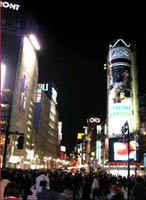
Shibuya: "My place near Shibuya. Early tomorrow is the sound check and rehearsal before the concert, so my place is closer--" Shibuya's a very trendy district in Tokyo. You can shop or dine in cool restaurants and cafes here, but it's more alive at night when young people come to go to the clubs or just hang out with their friends. The famous "Scramble Intersection" that you see often in anime and movies (four street corners where the crosswalks cross in the center and pedestrians cross the street diagonally, surrounded by buildings with MASSIVE TV screens) is right next to the station here.
Chapter 1
- Who:
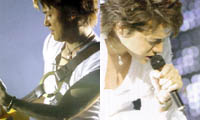
Fukuyama Masaharu: Fukuyama Masaharu is mostly a singer, but has also been a host for All Night Nippon. The kind of music he releases... hm, sounds simliar to easy listening from what I can hear. XD He's been described as "princely," and his fanbase seems to center around housewives. ♥- L'Arc~en~Ciel: A popular rock band in Japan that has been around since 1992, and has been releasing albums on a major record label (Sony/Ki-oon) since 1994. Current members are hyde (vocals), tetsu (leader, bass), yukihiro (drums), and ken (guitar). As of 2015 they've released twelve albums plus remix, best of, and other compilation albums. Apparently they hold the world record for fastest concert ever sold out (under four minutes for their 1997 Tokyo Dome concert)!
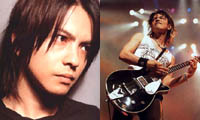
Takarai Hideto: The lead singer of L'Arc~en~Ciel; his stage name is "hyde." The band won't release their real names to the public, but "Takarai Hideto" is the name known by fans.- What:
- All Night Nippon: It's pretty much explained in this chapter. All Night Nippon is a long-running radio show that regularly has celebrity guests-- they talk about a broad range of subjects, and sex is definitely one of them. I'm not sure if he created the show, but in the 1980's it was hosted by a popular comedian/actor named Beat Takeshi. Maybe you know him? He's starred in movies like Zatoichi and Battle Royale. The most recent host I've been able to find was Fukuyama Masaharu.
- Kouhaku Music Festival: "The Yves Saint Laurent gown from this year's Kouhaku performance? The halter one, not the mini." "Kouhaku" refers to red and white-- the two most significant colors in Japan. Every year on New Year's Day popular Japanese musicians/bands/singers compete in a male versus female singing competition in a (two-hour?) long television showcase. The winner doesn't really get anything, though. XD It's not mandatory, but the performers usually wear (surprisingly!) red or white.
- Where:
-
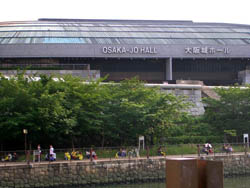
Osaka-jo Hall: The walkway below (in the picture) is where Kagome meets Hideto. Directly across the street is a McDonald's, heh heh.
Chapter 2
- What:
- Ichigo-pan: It means, "strawberry bread." The Japanese adopted the Portugese word for bread (*cough* "pan," in case you didn't catch it XD). Walk into a grocery store or bakery and you'll find TONS of flavored breads like melon-pan, spaghetti-pan, etc. Once you buy it, be sure not to hand your money/credit cards/etc directly to the clerk-- put it in the tray provided at the counter (unless there isn't one, of course). :D
- Where:
- The Kansai Prefecture: "Miss Kansai no Miko loves everything about this city... " Eh, that's actually mentioned in chapter 2 as well. Anyway, the Kansai prefecture (kinda like a county) is a region in Japan consisting of cities including Osaka, Kyoto, and Nara. Japanese spoken in this part of the country is often in a dialect called, "Kansai-ben" or "Osaka-ben."
Chapter 3
- Where:
- Akihabara: is the electronics district in Tokyo. Needless to say, it's a good place to buy things like electronics (wow, really?) anime and video games soundtracks/figures/merch, etc., (though it seems that Ikebukuro is starting to get more anime stores, and is, frankly, a little less creepy than Akiba.).
Chapter 4
- Where:
- Cebu, Philippines: Generally speaking, the Philippines is a tropical island nation, south of Taiwan. Cebu is an island/city that's in the south (not southernmost, though), and is a common vacation spot for Japanese tourists. In some Filipino airports don't be alarmed if someone grabs for your luggage, they're trying to carry it for you (for a fee, of course). If you don't want to pay the fee, don't allow anyone to carry your luggage. Simple. XD
Chapter 5
- Who:
-
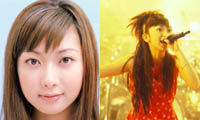
Mochida Kaori: Vocalist for the Japanese group, "Every Little Thing (ELT)" (the group who did the Deep Forest ending for the Inuyasha TV series) and Tetsuya's girlfriend. In photos of the real tetsu and Kaori, they both used to wear the same bracelet, but have long since been broken up. -
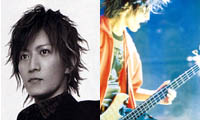
Oogawa Tetsuya: Leader, bassist, and backup vocalist of L'Arc~en~Ciel. When this fanfic was first posted online his stage name was, "tetsu" but it's now "tetsuya." Again, L'Arc has never officially released the band members' names but this is what most people think his real name is. He's not dating Mochida Kaori anymore, he's married to a much younger model and recently had a baby with her. - What:
-
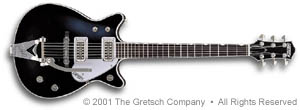
1962 Gretsch Duo Jet: It comes in a few variations and colors. I included this guitar in the story because I think it's sexy, first of all, but also because I've got more pictures of hyde with this guitar than any other. It's also in a couple of music videos, and he uses it in concert to play my favorite song in the universe :D (L'Arc~en~Ciel's Honey).
Chapter 6
- When:
- Christmas and KFC: On Christmas Eve chicken is a popular dinner if you're not going out to a restaurant in Japan. Expect a line out the door at most KFCs there because of this. I know I made Kagome actually buy the chicken dinner on Christmas-- my mistake. Forgive me, I wrote that chapter on Christmas day (which is more of a dating holiday on Japan, to be honest).
2005 Christmas Special:
- Who:
- Morning Musume (a.k.a. MoMusu): At one point, they were one of the most popular pop groups in Japan. They started with five members, and then after their first single added three more members. 2005 marked their seventh generation of members. Members regularly "graduate" from the group at age 20. They sometimes split into subgroups of smaller members, and... well, let's just say they were a pop music CONGLOMERATE. (I liked their older songs.) MoMusu, and their subgroups, and other artists of various ages are part of what is called, the "Hello! Project" They have a very long history that you can read about here... and are definitely part of a tradition of bajillion-membered pop groups. (If I were to write this chapter in 2015, I'd probably have subbed MoMusu with AKB48, or something-- similar type of group.)
- What:
- Okage-sama de: It literally means, "because of your honorable shadow." Other variations on this phrase are "okage de" or just "okage-sama!" and they all allude to showing gratitude. Since Kagome and Miroku call each other "Miroku-sama" and "Kagome-sama" in the anime/manga, I wanted to keep this in somehow. XD;;;
-
Age 20: "You kids are graduating this year... you'll both turn twenty faster than you think." In Japan, at age twenty you've come of age. People at age twenty can vote, drink, and smoke. There's actually a holiday called "seijin no hi" celebrated on January 15th of each year, for all who will turn twenty years old that year.
Heh, it's actually a pet peeve for me to read (in fanfic) talk about how the girl will be a legal adult at 18 in stories featuring Japanese people in Japan because of this. On that vein, age of sexual consent in Japan ranges from 13-18 and is a different matter than being a "legal adult." Girls can marry at 16 with parental consent, too. -

BMW Z07: This is the 1998 model which, I believe, is the last year this car was produced. Goes from zero to sixty in 4.2 seconds. One day that might be slow, but when this car came out, it sure as hell wasn't! There's rumors that in 2019 or so BMW's going to release another new Z7. -
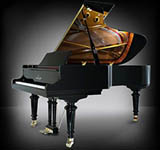
Shigeru-Kawai SK7: Now... imagine in it white. XD Kawai is a company that makes pianos, but the Shigeru-Kawai line is a very limited edition made with premium materials-- less than one percent of Kawai's instruments are distinguished as such. The SK7 is 7' 6" long (semi-concert grand). Longer strings give a richer tone. - B-Pass, Pop Beat: These are both popular music magazines in Japan. B-Pass not only showcases pop acts, but some rock and hip hop as well. Pop Beat is closer to its namesake and features mostly pop acts.
- Music Station, Hey! Hey! Hey! Music Champ, Pop Jam: These are/were all music shows in Japan that feature and interview one or several artists at a time to perform their hit singles at the moment, usually in front of a live studio audience.
- Glico: Japanese snackmaking company. Among their products are Pocky (the name that most people would recognize, right? XD), Pretz, and Kiss Mint Gum.
Chapter 7:
- What:
-
"The nail that sticks up will be hammered down" Contrary to what many of you see in anime, people who stand out in Japanese society are often ostrasized by others and bullied. People who are hafu (half Japanese), adopted, whose fathers aren't working as regular salarymen in a major corporation, etc, are often bullied by other people (especially students) simply because they are different. Japanese society values cooperation-- being part of a group who works for a common goal as opposed to selfishly working alone is very valuable. Since Kagome stands out in this story, the bullying seems like a natural response from her peers, to me.
This concept is actually why in the Inuyasha anime/manga, Kagome is looked at as the better love interest than Kikyou. Being with Kagome helps Inuyasha to find value in people he trusts-- to treasure his life and work with their group of friends towards the common goal of defeating Naraku, as opposed to simply dying with Kikyou. Once you're aware of it you can find this theme appear again and again in lots of anime/manga/tv shows. Woo-hoo, social brainwashing! XD
Chapter 8:
- What:
- Anta/antara nanka dai kirai! Pretty much means, "I really hate you!" Kagome screams, "antara" ("you (people)") because she's yelling at a group of people, and the crowd screams, "anta" back because they're just talking to Kagome. Neither of these are good ways of referring to people if you want them to like you. XD; Don't get "anta" mixed up with "anata".
- Love: "You're supposed to say you love me back!" she laughed. "I'll call you later tonight." We don't hear a standard "I love you" in a large amount of Japanese media, because (among other things) the Japanese language and culture still relies hugely on implication rather than saying things outright. A testament to this is in a manga called Nana where a girl tells someone that she wants the man she loves to tell her that he loves her. The guy who's in love with her convinces himself he needs to "act like an American" and simply tell her he loves her. Read more about the Japanese and the use of various words that mean love here and here.
Chapter 9:
- What:
-
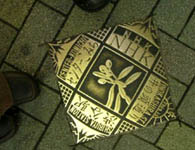
NHK: Stands for "Nippon Housou Kyoukai" (Japan Broadcasting Corporation). NHK is essentially the government's TV network (kinda like The BBC), and airs everything from news, sports, documentaries, children's shows, and... Kouhaku Music Festival! They actually charge a fee each year (I think it's around $150.00) that everyone who lives in Japan has to pay-- the NHK man goes door to door to collect the money and he's really tenacious. o_o;; Their building is located in Shibuya, so if you're walking down the street there, look for a brass emblem embedded into the sidewalk that will point you to it. XD - Where:
-
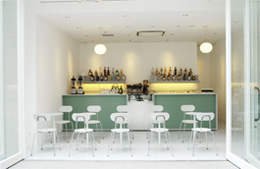
Café ±0: (website) Plus Minus Zero was a beautiful cafe! Plus Minus Zero is actually a company that makes products like electronics, housewares, and furniture, but their products are HEAVILY design-oriented-- extremely attractive. The cafe doesn't exist anymore (in 2015) but it heavily relied on its aesthetics and also had a patio portion where one could bring their dog. -
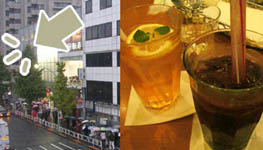
To The Herbs: (website) (Harajuku branch) Seated next to a large window at a warmly lit restaurant in Harajuku, To the Herbs, Kagome tapped her toe impatiently. This is a chain restaurant that served different types of pastas and pizza. There used to be a branch located across the street from Harajuku station, but... when I went to Tokyo in May of 2011 it had been removed. The whole building is now a Gap store (and still was when I went back in 2014)! T^T -
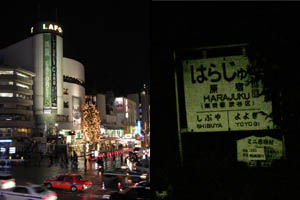
Harajuku: A fashion district-- people used to come here in droves on Sundays, dressed up, often in crazy or obscure styles that they normally don't wear on a daily basis (gothic lolita, punk, b-kei, etc). That sort of thing has dispersed into other districts, but Harajuku still has a ton of places to buy clothes that cater to these styles. Still one of my favorite places in Tokyo!
Chapter 11:
- What:
- MTV Asia/Japan: Though music video awards shows exist for MTV Asia and MTV Japan, MTV Asia's concentration is usually focused on China, Singapore, Korea, The Philippines, etc. Japanese guests are still invited and Japanese videos/artists can still get awards.
Chapter 12:
- What:
-
Flying to Japan: "...We dump the plane tickets we've got and I'll have Miroku book a return flight with JAL instead of ANA. And we'll land in Haneda instead of Narita." If you're going to Tokyo, you're most likely going to end up at Narita Airport. Haneda is a smaller airport, more intended for domestic flights. To get to it from L.A. Inuyasha and Kagome would probably have to fly into Osaka first, and then to Haneda.
JAL stands for Japan Airlines, and ANA is All Nippon Airways, which are the two major Japanese airline companies. (Heh heh, I love when I get to fly JAL to Japan; the service is amazing and I can practice my Japanese with the stewardesses in case I'm rusty XD; ) - Sexuality: With a sharp inhale the young woman raised her head to meet Inuyasha's eyes. "What are you-- No, don't! Ah..." Forgot to mention a little bit about this before, but something that should be noted culturally is the way that Kagome acts towards Inuyasha sexually: It's kindova BIG DEAL for a somewhat "proper" Japanese girl like her (growing up at a shrine, too!) to not even wait until Inuyasha removes her clothes. It is so not demure or dignified-- the way she's been acting all along, really. XD; The part where she starts to protest at first? That's demure. It's my guess that Inuyasha obliterating her lingerie would be the least he could do to compensate for not being able to do this thing that's kind of a manly task.
- Live: "Hmm, when we get back, I'm going to debunk that engagement crap. And I want to do some lives, too." "Live," or "raibu" as it's pronounced in Japanese, is used as a noun. It's essentially spoken in place of "concert" ("konsaato"), even though you can use that word too. From how I've heard it used, raibu seems to be the trendier of the two words, so I'd personally refrain from using it when referring to a visit to the orchestra. XD;
- Shukan Shincho: Is a weekly tabloid magazine in Japan. Outside of celebrity scandal news, it also publishes stories concerning offbeat topics that might be inappropriate for mainstream news.
Chapter 13:
- What:
- A, B, and C: "Only B. That's not sex." A, B, and C refer to stages of intimacy (like our own baseball analogies for sex). A is kissing, B is petting, and C is sex.
- Where:
- Rosu: "I told you I saw them get to B before they went to Rosu!" "Rosu" in Japanese, is short for Los Angeles.
- Genkan: "They were going at it. Heavy. In the genkan." In case you didn't catch it, "genkan" is the word for entryway. You often have to step up out of a genkan to enter the actual living space of a house, once your shoes are stowed (or just placed neatly to one side). There are often cabinets/cubbies where house slippers (including extra pairs for guests) are kept, and some people just keep all of their shoes in the genkan. It varies. XD I used this word instead of translating it at times to emphasize that it's got just a little more significance than a Western entryway, which isn't always part of a home, or even implemented in the same way. You're pretty much always going to have space in a Japanese home that's specifically for this purpose (even if it's only a couple of feet wide in a small apartment).
Chapter 14:
- Who:
- Talent ("Tarento"): "Fuck it, what do I care what you do to your own talent?" It's subtle, but this is actually a jab at Hojo by calling him "talent." Talent, or "tarento" are generally people who are famous for being famous. There are several archetypes, but Inuyasha's either referring to the type who is famous through association with someone else (Kagome), or just being a dumb, pretty face with no real skills other than being a piece of meat to look at.
Chapter 15:
- What:
-
Janken: "Jan."
"Ken," Sango continued, as the trio raised their fists a second time.
"Pon," Shippo finished, keeping his hand in a fist shape- rock.
As you may know, it's rock-paper-scissors. As you shake your fist three times, you say, "jan," "ken," and "pon" (or sometimes, "poi"). I'm actually surprised/amused at how often I've heard that Janken was used as a means of elimination in Japan! No, seriously, a Japanese CEO could not decide which auction houses he wanted to sell a set of Impressionist paintings through, making Christie's and Sotheby's play janken in order to decide! - Ooguma and Myouken: There, Kagome eventually focused her attention on the sky, catching sight of Ooguma- Ursa Major- and found the two stars pointing to Myouken. The north. "Ooguma" ("Big Bear") is just the Japanese word for Ursa Major (Ursa = "bear"), the constellation in which you'll find the Big Dipper asterism, which has stars that point to the North Star (Polaris). This isn't mainstream now, but in some sects of Shinto, this star was worshipped as Myouken-- a female deity who controlled fate and good fortune. She also prevented disasters.
-
Praying: Clapping her hands together in a short prayer, she'd hoped to get Myoujin's attention. Ever see people clap at a shrine before praying? It's said that you do this to get the gods' attention. Just for fun, if you're ever at a Shinto Shrine in front of the donation box, here's how you pray:
1. Put the offering in the box (any amount you think is right)
2. Ring the bell (just once)
3. Bow two times
4. Clap two times; on the second clap keep your hands together (this is when you start to pray). As your hands are pressed together keep your eyes closed and bow your head a little.
5. Bow one more time afterwards.
I don't pray at most Shinto shrines I go to, but I did pray to a god of cooking. Was it effective? Hey, who knows. My cooking has definitely improved since then, ha ha.
Chapter 16:
- Who:
- Yamaguchi-Gumi/Yakuza: Yamaguchi? Miroku had seen his face in the news, more than once! These people were... The Yamaguchi-Gumi ("Yamaguchi Gang") is the largest Yakuza organization in Japan. They're actually based out of Kobe (a city that's south and west of Tokyo), but have branches in Tokyo. The current kumicho/godfather of the Yamaguchi-Gumi doesn't actually carry the name, "Yamaguchi" (and it hasn't been that way for generations), so I'm taking HUGE liberties there. Yakuza in general have been integrated deeply into functioning parts of Japanese society (even I've benefitted from people's yakuza connections), and especially in the case of the Yamaguchi-Gumi can have businesses that are even legal. Primarily, though, they are still organizations who participate in illegal activity. While yakuza are an accepted (but downplayed) part of society, there's still a stigma attached to associating with them.
- Where:
- Nippon Budoukan: "That was great! That's so great, I've gotta do that again! In a bigger place, like Budokan!" This is an arena in Tokyo that holds 14,000 (ish) people, was originally built for judo competitions (it's still where lots of martial arts tournaments are held), but also has a history with both Japanese and western music. Western acts like The Beatles, Cheap Trick, and Bob Dylan have performed here or had live albums recorded here.
Chapter 17:
- Who:
- Kayoukyoku: "The pair sang seventies pop songs by people like Yamaguchi Momoe, Pink Lady, and Candies, to start." Showa-era pop (mostly Japanese pop from the seventies, when Emperor Showa was in power) is often referred to as "kayoukyoku," which literally means, "pop song(s)," but refers to this time period. The songs from this period are considered the modern basis for J-pop, and if you've listened to J-pop long enough you've probably come across a cover from one of these three (female) acts. (FYI Yamaguchi Momoe is my fav, is a total badass, and is LEGEND, look her up. ;D )
- Where:
-
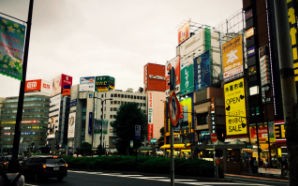
Ikebukuro: "That's what she repeated to herself, catching her reflection in the windows of closed shops and bars in Ikebukuro, clutching the tote bag her boss had filled earlier." This is another district in Tokyo that's mostly an entertainment and shopping area. More recently (in 2014) a few Animate stores have popped up, and there is an area called "Otome (Maiden) Road" where anime/game items aimed at women can be found... which, honestly, is nice, because even I've had run-ins with some very socially-awkward male otaku in Akihabara...
Chapter 18:
- Drinks!
-
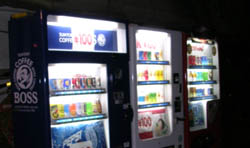
I noticed I'm throwing around Japanese brand names a little. I have a love affair with Japanese drinks, and that's mostly because they're not as overtly sugary as American stuff, and I don't feel my stomach rotting from the inside when I eat/drink them. Since I can think of two instances when I've mentioned brand name drinks in this story here's a little list and description of some popular Japanese drinks (that I happen to love):
Asahi and Sapporo - Both are brands of beer.
Chuuhai - You could compare it to a wine cooler– the name is derived from "shochuu" and "highball", so it's traditionally a shochuu-based drink with carbonated water and lemon (or other fruit) flavoring. Sometimes they use vodka instead of shochuu, whatever, it's can have a range of high alcoholic content or high sugar because it varies to some degree. Like many drinks and etc. in Japan, you can get it cheaply
Boss 7 - Coffee. :D There are actually more "Boss" drinks than just Boss 7, but I haven't tried them.
C.C. Lemon - This is what Kagome drinks in chapter 6. It's basically just a lemon soda.
Melon Fanta - Same soda as the Fanta in the United States, however the U.S. is making a huge mistake in not selling this flavor. It's YUMMY. Kagome and Hojo drink the peach flavor (supposedly it exists in the U.S.?! I only found it in Japan!) in chapter 4.
Calpis Water - It's milky white but has a very Asian almost-honeydew-melon-but-really-not, hey-this-is-kinda-candy-like flavor. I love the peach flavor...
Ramune - The famed soda that comes in a slim glass bottle sealed with a marble that you open while hoping that half of your drink won't explode from the bottle. Again, with the standard Japanese if-honeydew-melon-and-passion-fruit-had-a-mild-flavored-candy-baby flavor.
Pocari Sweat - Essentially ramune-flavored Gatorade.
Bikkle, Yogloo, & Yakult - Yogurt drinks without the thick texture of yogurt. Bikkle and Yogloo come in regular bottle sizes, but Yakult comes in packs of five or so with foil caps, in bottles a little bigger than two of my thumbs. Tastes way better than it sounds, but in all honesty I can't think of a single Caucasian I know who likes the stuff. I was given Yakult as a baby.
If you find yourself in Japan you'll find that the streets are brimming with vending machines. Shell out 350en and try the drinks! They're damn good.